- No products in the cart.




CORNER DESKS REIMAGINED: THE SMARTER WAY TO CREATE A UK HOME OFFICE THAT ACTUALLY WORKS

26
Mar
If you are looking for a practical way to make better use of your room, improve your working setup, and create a workspace that feels more organised from day one, corner desks are one of the smartest furniture choices you can make.
Whether you work from home full time, need a study zone for uni or college work, run a business from your spare room, or simply want a cleaner and more efficient setup for everyday life, the right desk can completely change how your space functions. And when floor space is limited, awkward, or shared with other furniture, corner desks often solve problems that standard desks simply cannot.
In homes across the UK, people are trying to fit more into less space. Box rooms are becoming offices. Bedrooms are doubling up as study areas. Open-plan spaces are being divided into work zones. That is exactly why corner desks have become such a popular solution. They allow you to use neglected corners, create more surface area, and make your room feel more purposeful without necessarily making it feel cramped.
This guide covers everything you need to know before buying one. From sizing and layout tips to storage, materials, styling, ergonomics, and who they suit best, this is your complete practical guide to choosing the right corner desk for your home.
Why corner desks are such a smart choice for modern UK homes
One of the biggest advantages of corner desks is how efficiently they use space. In many homes, corners are underused areas that end up holding clutter, baskets, or nothing at all. A well-designed desk turns that dead space into a functional working area.
Unlike a straight desk that usually sits flat against one wall, corner desks take advantage of two walls or wrap around into the room, which can create a much larger and more useful work surface. That means more room for your laptop, monitor, keyboard, notebook, lamp, printer, storage trays, and everyday essentials without feeling like you are constantly short on space.
They also help define a dedicated work zone. This matters more than many people realise. If you are working from the dining table, sofa, or a cramped single desk in the corner of a room, your environment can feel temporary and distracting. A proper workstation helps you mentally switch into work mode, stay more organised, and separate your work life from your home life.
For many UK households, especially where space is tight, corner desks offer the balance people are looking for: practical, spacious, and compact at the same time.
What are corner desks?
Corner desks are desks designed to fit into a corner or create an angled or L-shaped working layout. They are built to maximise workspace while making better use of room geometry.
The most common types include:
L-shaped corner desks
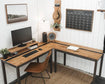
These are probably the most popular style. They feature two desk surfaces joined at a right angle, creating a larger wraparound workspace. This is ideal for multitasking, dual-monitor setups, admin work, studying, or separating different tasks across each side.
Compact corner desks
These are smaller models designed for tighter rooms, bedrooms, or student spaces. They are perfect when you want the benefits of corner desks without taking up too much floor area.
Reversible corner desks
A reversible desk can be assembled with the longer side on either the left or the right. This is incredibly useful because it gives you more flexibility depending on your room layout.
Corner desks with storage
Some designs include built-in drawers, shelves, cupboards, or raised storage sections. These are ideal if you want your desk to work harder and reduce the need for additional furniture.
Gaming-style corner desks
Although often associated with gaming, these can also work brilliantly as practical home office desks thanks to their wider surfaces and ergonomic layouts.
The biggest benefits of choosing corner desks
When people first start shopping for desks, they often look at appearance first. But the real long-term value comes from how a desk performs in daily life. This is where corner desks really stand out.
1. They maximise floor space
This is their biggest strength. A corner desk makes use of a part of the room that is often difficult to furnish effectively. Instead of pushing furniture awkwardly around a room, you can build your setup into the corner and free up the rest of the floor.
2. They give you more usable workspace
One of the most common frustrations with a standard desk is running out of room. A laptop, monitor, keyboard, notebook, and mug can quickly make a desk feel cluttered. Corner desks usually offer far more usable surface area, which makes day-to-day work feel easier and less cramped.
3. They help with organisation
Because you have more space, it becomes easier to separate tasks. One side can be for your computer and main work. The other can be for writing, paperwork, books, or accessories. That separation can make your whole working day feel more efficient.
4. They can improve focus
A well-positioned corner desk creates a dedicated workstation that feels more enclosed and intentional. For many people, this improves concentration and reduces distractions.
5. They suit both work and study
Corner desks are ideal for adults working from home, students revising for exams, teenagers needing a proper homework setup, or anyone who wants a more functional room layout.
Are corner desks good for small rooms?
Yes, absolutely, and this is one of the reasons they are so popular.
There is a common assumption that corner desks are only suitable for large home offices, but in reality, they can work extremely well in smaller UK homes, flats, and bedrooms. The key is choosing the right shape and dimensions.
A compact corner desk can often feel less intrusive than a straight desk because it follows the natural line of the room instead of cutting across it. In a small room, this can make the layout feel more natural and less boxed in.
If you are furnishing a box room, spare bedroom, loft conversion, or bedroom office, corner desks can often provide a better balance between workspace and floor space than traditional desks.
Tips for using corner desks in small rooms
- Measure both walls, not just one
- Check radiator placement and window openings
- Leave enough room for your chair to move comfortably
- Think about plug socket access
- Avoid overly chunky drawer units if space is tight
- Choose lighter finishes if you want the room to feel more open
When chosen carefully, corner desks can make a small room feel more functional, not more crowded.
How to choose the right size corner desk
Size matters more than many people expect. A desk that looks ideal in a photo can feel too large or too small once it is in your home. Before buying, it is worth thinking beyond just width and considering how you actually plan to use it.
Start with the room
Measure the corner space properly. That means checking:
- Wall-to-wall width on both sides
- Depth from the wall into the room
- Ceiling slope if it is going under eaves
- Skirting boards or awkward wall features
- Door swing and access
- Distance from bed, wardrobe, or other furniture
Then think about your setup
Ask yourself:
- Will you use one screen or two?
- Do you need space for paperwork?
- Will you use a printer or storage trays?
- Do you need room for writing as well as typing?
- Will the desk be used daily or occasionally?
A student setup may need less depth than a full home office. A business owner, designer, editor, or remote worker may need significantly more room.
The best corner desks are not just the ones that fit your room. They are the ones that fit your routine.
Left-hand or right-hand corner desks: which do you need?
This is one of the most important buying decisions and one that many people overlook until too late.
Some corner desks are fixed, which means the longer side only works on one side. Others are reversible and can be built either way.
To decide what works best, think about how you move around your room and how you want your desk to function.
A left-hand layout may work best if:
- The longer side fits better along the left wall
- You want drawers or storage on the left
- Your room layout flows better that way
A right-hand layout may work best if:
- Your monitor or main work zone works better on the right
- The room entrance or window placement suits it better
- You need better access to storage or wall sockets
If you want the most flexibility, reversible corner desks are often the safest option.
Corner desks for working from home
Working from home has changed how many people in the UK use their homes. A desk is no longer just occasional furniture. For many people, it is where they spend a large part of the week.
That means comfort, practicality, and layout matter far more than before.
Corner desks are especially useful for home working because they help create a more serious and productive environment. If you are spending hours answering emails, taking calls, attending meetings, managing paperwork, or running a business, you need more than just somewhere to place a laptop.
What to look for in corner desks for home working
- Enough space for a proper screen setup
- Good legroom
- Space for notebooks and accessories
- Room for a desk lamp or task lighting
- Cable management options
- Storage if you deal with paperwork
- A layout that keeps everything within reach
A good desk can make your working day feel smoother, cleaner, and more manageable.
Corner desks for students and study spaces
Students often need a desk that supports multiple tasks at once: revision, writing, laptop work, online learning, note-taking, and storage. This is where corner desks can be particularly useful.
The extra surface area means it is easier to keep books, folders, and devices organised without everything piling up into one small zone.
They are also great for bedroom study setups because they can make a room feel more structured and less chaotic. Instead of spreading work across the bed or floor, a dedicated study corner helps create a more productive habit.
If the desk is for a student or teenager, think about long-term use. Choosing something practical and adaptable can make it useful for years rather than just one stage of life.
Corner desks with storage: are they worth it?
For many people, yes.
Storage can make a huge difference to how tidy and usable a desk feels. If your desk becomes covered in chargers, documents, stationery, notebooks, and random bits within a week, then built-in storage can be a very worthwhile feature.
Common storage features in corner desks include:
- Drawers
- Open shelving
- Raised monitor shelves
- Side cupboards
- Keyboard trays
- Under-desk shelving
- Filing sections
The best option depends on how you use your desk. If you work digitally and like a clean minimalist look, you may prefer a more open design. If you handle paperwork, stationery, or accessories daily, storage can make life much easier.
Just keep in mind that more storage usually means a bulkier desk, so balance practicality with room size.
Best materials and finishes for corner desks
The material and finish of a desk affect more than just how it looks. They also influence durability, maintenance, and how well it fits into your room.
Wood-effect finishes
These are very popular in UK homes because they add warmth and character. They can help a workspace feel less clinical and more natural.
White finishes
White corner desks are a popular choice for smaller rooms because they reflect light and can make a room feel brighter and more spacious.
Black finishes
These can look sleek and modern, especially in contemporary setups, but they may show dust more easily.
Grey and neutral finishes
These are versatile and practical, working well in both home office and bedroom settings.
Metal-framed desks
These often create a more industrial or minimalist look and can feel sturdy and clean-lined.
When choosing a finish, think about the rest of your room. The best corner desks are not just practical. They also help the room feel cohesive and intentional.
How to style corner desks so they look great as well as practical
A desk does not need to feel boring or purely functional. With the right setup, corner desks can look clean, modern, and genuinely inviting.
Easy ways to style a corner desk well
- Add a good desk lamp
- Use a cable tray or clips to reduce visible wires
- Keep stationery in matching organisers
- Add one plant for softness
- Use a pinboard or wall shelf above the desk
- Keep your desktop mostly clear
- Add a comfortable supportive chair
- Use one or two personal items rather than lots of clutter
The goal is not to over-style it. The best-looking desks usually feel simple, clean, and usable.
Ergonomics: how to make corner desks comfortable for daily use
A desk can look perfect and still be uncomfortable if it is not set up properly.
If you are using your desk for hours at a time, ergonomics matter. Poor posture, screen height, and chair setup can quickly lead to neck, shoulder, wrist, or back discomfort.
Tips for setting up corner desks ergonomically
- Keep your screen at eye level
- Sit with your feet flat on the floor
- Make sure your elbows are roughly at desk height
- Keep your keyboard and mouse within easy reach
- Use the main corner or central section for your primary task
- Position your chair so you are not twisting awkwardly
One of the advantages of corner desks is that they often allow you to centre your working position better, especially if the desk has a natural focal point in the middle.
Common mistakes people make when buying corner desks
Buying the wrong desk can be frustrating, especially when it arrives and does not suit your room or routine.
Here are some of the most common mistakes to avoid:
Choosing based only on appearance
A desk may look great online, but if it does not suit your room, layout, or daily needs, it will quickly become annoying.
Not checking the orientation
Always confirm whether the desk is left-handed, right-handed, or reversible.
Forgetting about chair movement
A desk may technically fit, but you still need enough room to sit comfortably and move your chair back.
Ignoring storage needs
If you know you need drawers or shelves, do not assume you can “make do” without them.
Underestimating surface space
Think realistically about what you use every day. A desk that is too small will feel cluttered quickly.
Not planning cable access
This matters more than people expect, especially if your sockets are not conveniently placed.
Corner desks vs standard desks: which is better?
This depends on your room and how you work, but for many people, corner desks offer more flexibility and better everyday practicality.
Standard desks may be better if:
- You have a very narrow room
- You only need a simple laptop setup
- You want a minimal footprint
- Your layout does not suit a corner configuration
Corner desks may be better if:
- You need more workspace
- You want to maximise room layout
- You use multiple devices or accessories
- You want a more dedicated workstation
- You need a desk that works harder in a smaller room
For many households, corner desks are simply more efficient because they give you more without necessarily demanding more floor space.
Are corner desks good for gaming as well as work?
Yes, very much so.
Although many people search for corner desks for office or study use, they also work extremely well for gaming setups. The wider surface area makes them ideal for monitors, keyboards, speakers, accessories, and more immersive layouts.
And if your room needs to function as both a workspace and a gaming space, corner desks can help you divide those zones more effectively. One side can be for work or study, and the other can be for your personal setup.
That versatility is one of the reasons they are such a practical long-term furniture choice.
How to know if corner desks are right for you
Corner desks are likely a good fit if any of the following sound familiar:
- You work from home and need more usable desk space
- Your current desk feels too small or cluttered
- You want to make better use of a spare room or bedroom
- You need a more organised study area
- You want a cleaner and more productive setup
- You are trying to maximise floor space in a compact room
- You need a desk that can handle multiple tasks at once
If you are constantly feeling short on surface space or your current setup feels awkward, a corner desk can often be one of the most effective upgrades you can make.
Final thoughts: why corner desks continue to be one of the best space-saving desk choices
When chosen well, corner desks do far more than just fill a corner. They can transform the way a room works, improve your daily routine, and make your workspace feel more efficient, more comfortable, and more enjoyable to use.
In a time when many UK homes need to serve multiple purposes at once, flexible furniture matters more than ever. A desk is not just a desk anymore. It is where people work, study, create, organise, plan, and spend real time every day.
That is why corner desks continue to be such a smart investment. They make better use of your room, give you more practical surface area, and help create a setup that actually supports the way you live.
If you are looking for a desk that offers more space, better layout, and a more purposeful home office or study area, corner desks are one of the most practical and rewarding options to consider.
The right one can make your room feel bigger, your work feel easier, and your setup feel far more complete.